Summer marketing 2026: how to advertise your business in summer
Local SEO, social, local ads and promotions: the practical guide to advertising your business in summer, with an operational calendar from June to September.
Every summer the same scene plays out: the owner of a local business thinks "everyone's on holiday anyway, I'll pick things up in September", dials down communication and pauses the campaigns. That's exactly the mistake your sharper competitors are waiting for. Demand doesn't vanish in summer: it shifts, changes pace and becomes more impulsive. Whoever stays visible while others switch off gains market share at a lower cost.
In this guide you'll find the operational strategy we apply at +Click with bars, restaurants, beauty salons, gyms, shops and service businesses: how to advertise your business in summer without wasting budget, with a concrete calendar from June to September. No theory: real numbers, sector tactics and the mistakes to avoid.
Summer 2026: for your business it's an opportunity, not a pause
The common reflex is "business slows in summer, so I'll invest less in marketing". For some businesses volumes really do drop (offices, B2B, business services); for many others summer is the hottest period of the year (food, beauty, neighbourhood retail, fitness, tourism). In both cases cutting communication is counterproductive: in the first to stay present when the few customers decide, in the second to not miss the peak.
The summer competitive advantage is precisely everyone else stepping back. When half your competitors stop posting and turn off ads, the cost of capturing attention drops: less crowded auctions, lower CPMs on Meta, less competition on local keywords. Staying active, even with a small budget, pays off more than usual.
What customers actually search for in summer
To advertise well you need to understand how the behaviour of those searching for you changes. Three specific things happen in summer.
Local intent explodes: "near me" and mobile
On holiday, travelling or simply out for an aperitivo, people search from their phone, in the moment of need: "ice cream shop open near me", "hairdresser available today", "restaurant with a view". This is extremely high-intent search: someone searching like this is ready to buy in the next few minutes. For restaurants, over 70% of summer searches come from smartphones. That means your local profile and mobile site must be flawless.
Different rhythms: who leaves, who stays, who arrives
- Those who leave: your regulars who travel. Build loyalty before (rewards, bookings for their return) and reach out again in September.
- Those who stay: in the city in summer, competition thins out. It's the moment to win the "remainers" with targeted offers and useful content.
- Those who arrive: tourists and holidaymakers who don't know you. You win them with local SEO, reviews and geo-targeted ads on the tourist flow in your area.
A good summer strategy holds all three audiences together with different messages: retain, acquire locally, intercept those passing through. It's the same logic as tourism marketing for hotels and holiday homes, applied to a neighbourhood business.
The 2026 summer marketing calendar, month by month
The difference between those who improvise and those who grow is planning. Here's the operational calendar we use as a skeleton, to adapt to your sector. Save it and use it as a checklist.
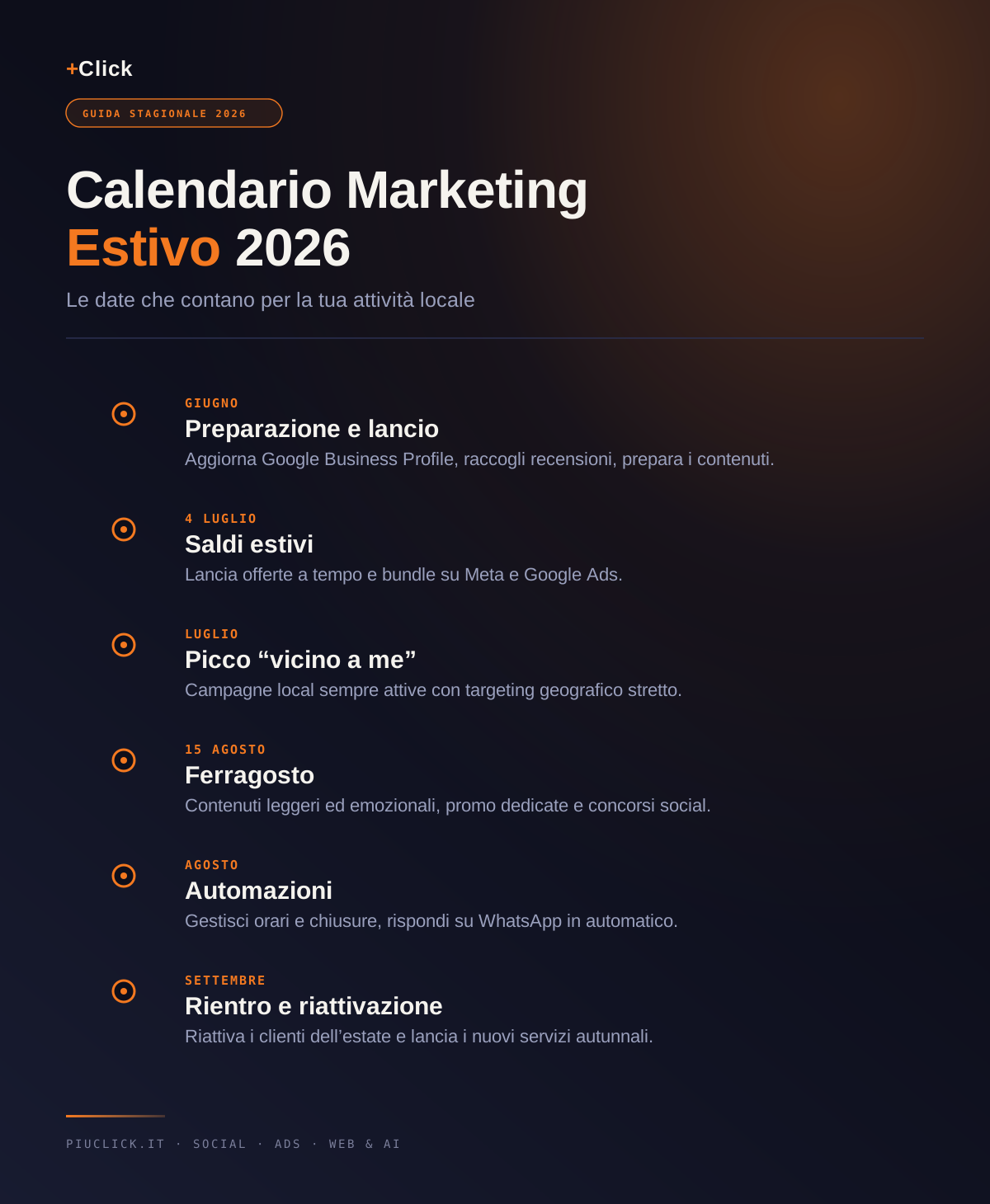
June: preparation and launch
- Update your Google Business Profile with summer hours, recent photos and dedicated posts.
- Prepare content and creative for the whole season (better in one block, now that you have time).
- Start collecting reviews: every satisfied June customer is a review working for you in July.
- Launch the first low-budget local awareness campaigns to "warm up" the audience.
July: peak and sales
- The 2026 summer sales start on 4 July in most Italian regions (around 60 days): use them with time-limited offers, even if you're not a shop (a "sale" menu, a treatment package, a summer membership).
- Peak of "near me" searches: keep local campaigns always on with tight geo-targeting.
- Push content that shows the live experience: a full terrace, the before of a haircut, the gym floor. Social proof converts.
August: Ferragosto and automations
- 15 August, Ferragosto: light, emotional content, dedicated promos, social contests ("share your summer with us").
- Communicate hours and closures clearly: an up-to-date Google listing avoids lost customers and negative reviews from wasted trips.
- Turn on automatic WhatsApp Business replies and out-of-hours messages: sell (or book) even when the business is closed.
September: return and reactivation
- Reactivate summer customers with a "back to it" newsletter or message and a return offer.
- Launch new autumn services/menus: in September attention is at its highest and the urge to "start fresh" is a purchase trigger.
- Analyse the season's data (which content, which ads, which offers paid off) to set up autumn. Always measure: see how in measuring marketing ROI.
Local SEO and Google Business Profile: the zero-cost base
Before spending a euro on advertising, fix the highest-ROI channel for a local business: the Google Business Profile and local search. It's free, and it's what people see when they search "[your service] near me".
- Correct primary category and secondary categories: this is what makes your listing show up in the right searches.
- Always-updated summer hours, including special closures and Ferragosto: nothing does more damage than wrong opening hours.
- Fresh seasonal photos (at least 15-20 new ones): terrace, summer window, seasonal products. Listings with recent photos get more clicks and direction requests.
- Weekly posts with offers, events and news: they keep the listing alive and signal to Google that you're active.
- Reviews: volume, recency and a reply within 48 hours. In summer the flow grows, so it's the moment to ask systematically.
Summer social content: emotion, lightness, rhythm
Summer is the most emotional season of the year: freedom, lightness, sharing, nostalgia. Content that rides these emotions performs better, because memory is emotional before it is rational.
In practice, what to post? Short, vertical formats (Reels, TikTok, Shorts), because in summer content is consumed on the move and fast. Dive deeper in our piece on video marketing for social and the Instagram editorial plan.
- Summer behind the scenes: preparing a fresh dish, the fruit counter, the pre-opening routine. Authenticity, not polish.
- Useful, seasonal content: "3 ideas for a terrace aperitivo", "how to protect hair from salt", "training in the heat without fainting".
- User generated content: invite customers to tag you with a dedicated hashtag. It's free social proof that reaches their networks.
- Time-limited offers stated in the first 2 seconds of the video: in summer scrolling is fast, the hook must be immediate.
Google Ads and Meta Ads in summer: real budgets and tactics
Paid advertising is the lever that accelerates everything else. In summer it works even better for two reasons: auctions are less crowded (many competitors switch off) and local purchase intent is high. Here's how to use both channels.
Google Ads: intercept those already searching for you
Google Ads shows your ads to people actively searching ("ice cream shop open now", "beautician available today", "tyre garage nearby"). This is hot demand, ready to convert. For a local business, start with a few high-intent keywords, call and location extensions, and a clear landing page. See the Google Ads for small businesses guide.
Meta Ads: create demand and get discovered locally
Meta (Facebook and Instagram) helps generate demand and get discovered by those not yet searching for you. In summer CPMs drop: great for local awareness, retargeting site visitors and lookalikes of your best customers. The full method is in the Meta Ads with positive ROAS for SMBs playbook.
Real budgets for a local business
- Local Google Ads: €300-500/month for a campaign on 5-10 keywords in your radius. Even €200-300 in a small town brings concrete results.
- Local Meta Ads: €200-400/month across awareness, retargeting and leads/messages. Tight geo-targeting (5-15 km) to avoid wasting impressions.
- Golden rule: better to coordinate the two channels. Meta creates desire and drives discovery, Google captures the demand that gets generated. Together they cost less and pay off more over time.
Summer promotions that convert (without killing your margin)
Promotion doesn't mean a price discount. The best offers increase perceived value instead of eroding margin. Four schemes that work for a local business.
- Time-limited offer (urgency): "this week only", "until Ferragosto". The deadline drives the decision without devaluing the brand.
- Bundles and packages: instead of discounting a single item, create a summer package (3 treatments, a tasting menu, a 2-month membership) that raises average spend.
- Extra benefit instead of a discount: a freebie, an upgrade, a welcome drink, a free add-on service. High perceived value, low cost.
- Summer loyalty programme: "every 5 visits the 6th is free" retains those staying in town and creates return visits in August.
If you also have an online channel, summer is perfect for sale-themed campaigns: we covered it for e-commerce in summer sales 2026: ads and e-commerce, but the same logic of urgency and bundles works for any business.
Ferragosto, hours and closures: don't disappear
Ferragosto (15 August) is a watershed. Habits change: day trips, relaxing, food and drink. It's the moment for light "escape mode" content and, above all, total clarity on when you're open.
- Communicate special hours and closures well in advance on Google, your site and social: a customer who finds "closed" with no notice doesn't come back, and sometimes leaves a negative review.
- If you stay open, use it as a competitive advantage: "Open on Ferragosto too" is a message that drives traffic by itself while others are shut.
- Launch a themed promo or event: a Ferragosto menu, a photo contest, an offer valid only on 15 August.
- Schedule content in advance: on Ferragosto you want to be at the beach, not writing posts. This is where automations come in.
WhatsApp and automations: selling even while you're on holiday
In summer you're (rightly) more absent too. Automations exist so you don't lose enquiries while your phone is in your pocket or you're closed. WhatsApp Business is Italians' preferred channel for contacting a business: a WhatsApp enquiry converts far better than a form, because the conversation removes objections.
- A clearly visible WhatsApp button on site, Google listing and social bio, with a pre-filled message ("Hi, I'd like to book for...").
- Automatic welcome replies and out-of-hours messages: someone who writes at night or to a closed shop gets an immediate reply and doesn't go to a competitor.
- A product/service catalogue inside WhatsApp Business: the customer browses and asks without wasting your time.
- For high volumes or multiple operators, consider the WhatsApp Business API with a pre-qualification chatbot. The base strategy is in WhatsApp Business marketing.
Likewise, a pre-scheduled email and SMS marketing automation flow (welcome, summer offer, win-back, September return) works for you 24/7 without you touching a thing.
Tactics by sector: food, beauty, fitness, retail, services
Restaurants, bars, ice cream shops
Lead with terraces and outdoor seating in photos, summer menus and aperitivi, one-tap booking (WhatsApp/Google). Tap into "near me" mobile searches and recent reviews. Dedicated deep dive: restaurant marketing.
Beauty salons, hairdressers, beauty
"Pre-holiday" promos (waxing, tanning, manicures) in June-July and "get back in shape" packages on return. Before/after content and seasonal tips (hair and sun) work great, as in the Estethya Beauty case.
Gyms, personal trainers, sports centres
Summer is the peak of "beach body" motivation and, in August, of drop-off. Sell flexible summer memberships, timed challenges and "training in the heat" content. In September push hard on the restart, as in the Energym Mentana case.
Shops, retail and personal services
For retail: summer window, sales from 4 July, bundles and click-and-collect. For services (garages, plumbers, pharmacies, studios): Google campaigns on local urgency and a polished Google listing, as in the F&F Autoservice and Parafarmacia Sana cases.
5 mistakes that burn budget in summer
- Switching everything off "because I'm on holiday": you hand sharper competitors the share you leave uncovered, exactly when capturing it costs less.
- Geo-targeting that's too broad: you pay for clicks and impressions from people who can never reach you. Tighten the radius.
- A Google listing with wrong hours: double the damage, lost customer plus negative review. Update it before every long weekend.
- Only discounts, never value: constant discounting trains customers to expect it and erodes your margin. Alternate urgency, bundles and extra benefits.
- No measurement: without tracking you don't know what worked and you repeat mistakes. Set goals and read the data, as we explain in the piece on marketing ROI.
Real cases: how we did it
Three concrete examples from our work, because strategy only counts if it produces numbers.
- Villa Pacieri: social management, a shoot and geo-targeted Meta Ads within a 20 km radius for a highly seasonal business. Result: over 100 sign-ups for the open day and 368K views in one month (261K Facebook + 107K Instagram), with profile visits +105%.
- Selfiestreet: high-performance campaigns with a €0.44 cost per install, proof that with the right creative and targeting even small budgets pay off enormously.
- Energym Mentana and Estethya Beauty: ongoing social and ads management for seasonal local businesses (fitness and beauty), with content adapted to the rhythm of summer and the September restart.
Summer rewards those who don't disappear. While half the market switches everything off, a polished Google listing, content that stirs emotion and a few well-targeted campaigns are enough to win customers at a lower cost than the rest of the year. You don't need a big budget: you need to be there, with method.
— Niccolò Giuseppetti, +Click founder
Checklist: what to do in the next 30 days
- Update your Google Business Profile: summer hours, 15-20 new photos, first promotional post.
- Set up systematic review collection (request via WhatsApp/QR at the end of service).
- Prepare July and August social content in one block (Reels and posts), including Ferragosto.
- Define a time-limited promo and a summer bundle that doesn't erode your margin.
- Launch a local Google campaign (€300-500/month) and a local Meta one (€200-400/month) with tight targeting.
- Turn on WhatsApp Business: button, pre-filled message, out-of-hours automatic replies.
- Schedule a "return" email/SMS to send in September to your summer customers.
- Set up tracking (goals, calls, messages) to measure what actually works.
FAQ: summer marketing for your business
Is it really worth continuing to advertise in summer?
Yes, for most local businesses. Demand doesn't vanish, it shifts and becomes more impulsive, while many competitors reduce their communication: this lowers advertising costs (less crowded auctions, lower CPMs) and makes it easier to stand out. Even with a small budget, staying visible in summer often returns more than the yearly average.
How much budget do you need to advertise a local business in summer?
Realistic ranges: Google Ads €300-500/month for a local campaign on 5-10 keywords (even €200-300 in a small town brings results), Meta Ads €200-400/month across awareness, retargeting and messages. The most important thing isn't the figure but tight geo-targeting and coordination between the two channels.
What is the most effective zero-cost channel?
An updated Google Business Profile. For a local business it's the highest-ROI channel: correct hours, fresh photos, weekly posts, replies to reviews and a "Book"/WhatsApp button. It's free and it's the first thing people see when they search "[your service] near me".
What kind of content should you post on social in summer?
Short, vertical, emotional content: behind the scenes, seasonal products, useful tips, time-limited offers stated in the first 2 seconds and user generated content from customers. Summer is an emotional season and messages that trigger emotion are remembered far more.
How do you handle closures and the Ferragosto period?
Communicate hours and closures well in advance on Google, your site and social to avoid losing customers and reviews. If you stay open, turn it into an advantage ("Open on Ferragosto too"). In any case, schedule content in advance and turn on automatic WhatsApp replies so you don't lose enquiries while you're away.
When should I start planning my summer strategy?
Ideally by the first half of June, before the season ramps up. Preparing content, campaigns and promotions in advance lets you be present consistently from July to September without improvising during your busiest time. If you're late, start anyway: better to get going mid-season than to stay still.
Want a summer strategy tailored to your business?
We analyse your Google listing, your social, your website and tell you where it's worth investing this summer to bring in more customers without wasting budget. Even if our analysis is that you're already doing well, we'll tell you.
Request a consultation